

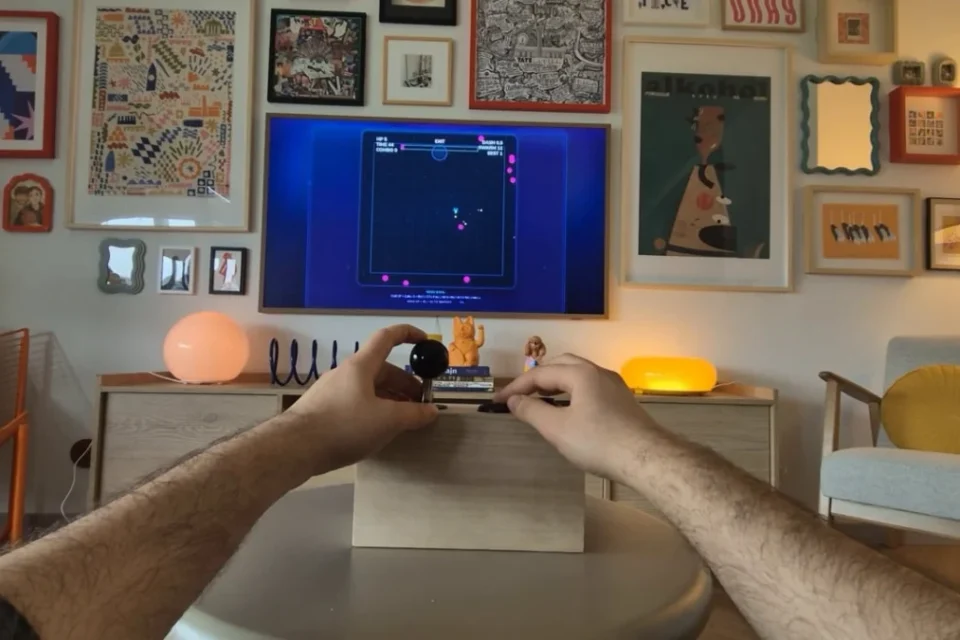
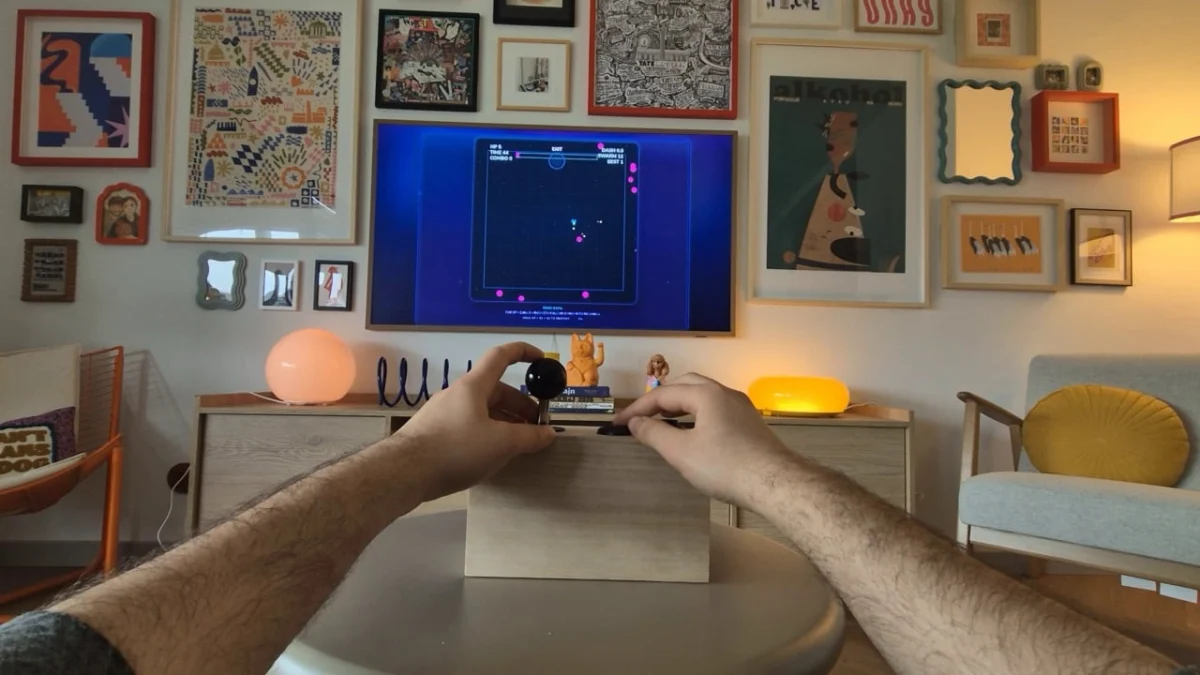
In the landscape of DIY computing, the Raspberry Pi has long been the undisputed king of the "retro-box." For over a decade, hobbyists have used the credit-card-sized computer to build emulation stations capable of housing thousands of titles from the 8-bit and 16-bit eras. However, a new project by developer and maker Grigor Todorov is turning this concept on its head. Rather than looking backward at the history of gaming, Todorov’s "AI Arcade" looks forward, utilizing Large Language Models (LLMs) to generate entirely new, playable games on the fly.
The AI Arcade is a physical manifestation of a growing trend in software development known as "vibe-coding," where natural language instructions replace traditional syntax. By housing this cutting-edge software inside a charmingly lo-fi wooden chassis, Todorov has created a bridge between the tactile nostalgia of the 1980s arcade and the frontier of artificial intelligence.
Main Facts: The Architecture of an AI-Generated Experience
The AI Arcade is built upon the Raspberry Pi 4 (8GB model), a choice driven by the board’s balance of power efficiency and its robust community support. Unlike a standard console that reads data from a cartridge or a hard drive, the AI Arcade acts as a portal to an LLM (specifically ChatGPT via API).
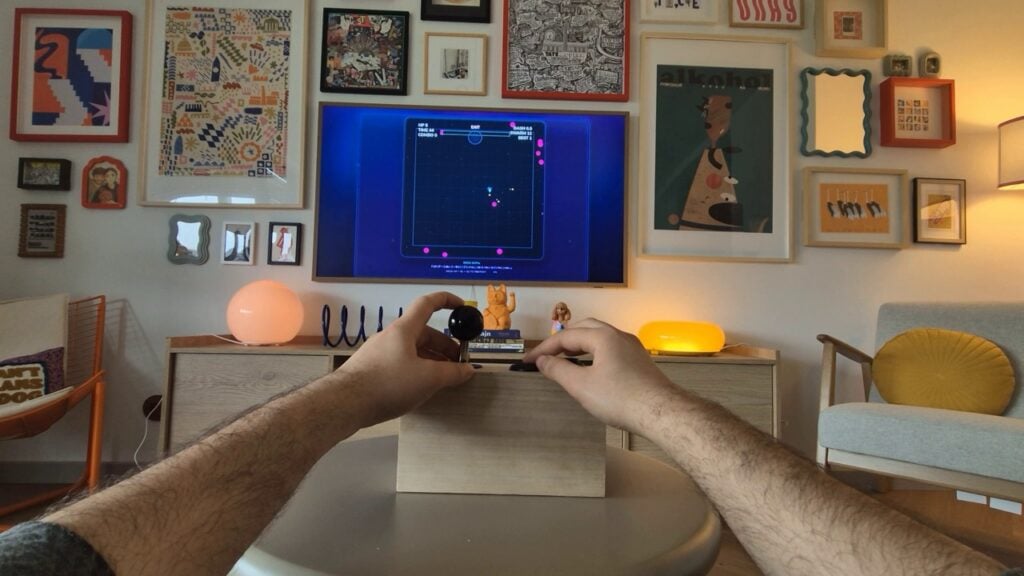
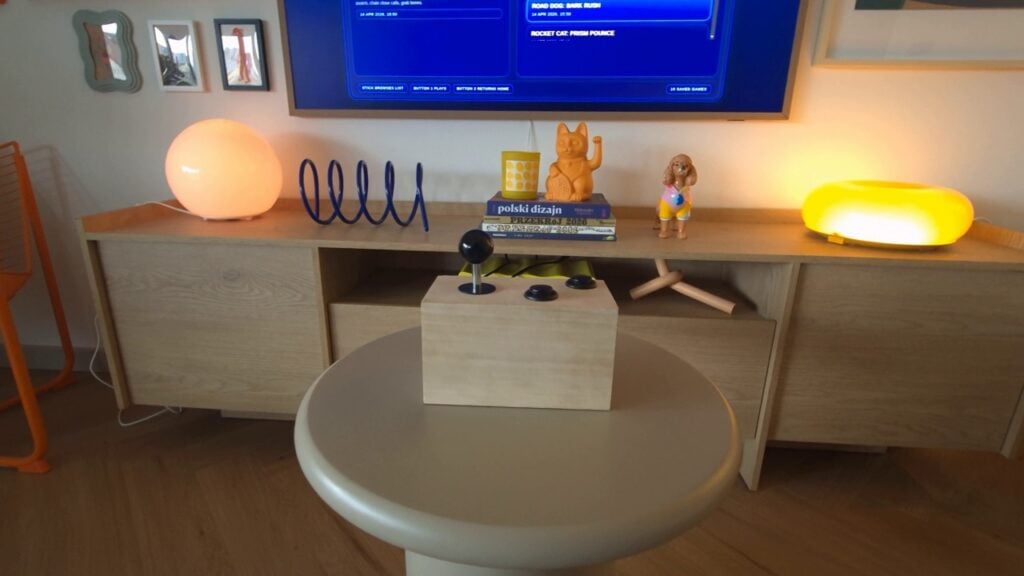
The hardware is deceptively simple: a repurposed wooden box—originally packaging for glass cups—outfitted with a classic arcade joystick and two action buttons. Inside, the Raspberry Pi 4 runs a localized web application that manages the interaction between the user, the hardware, and the AI backend.
The core innovation lies in the "Two-Step Generation" process. To avoid the chaos of purely random code, Todorov’s system first asks the player a series of four questions, each with two possible answers. These choices define the theme, mechanics, and style of the game. Once the player has made their selections, the system sends a structured prompt to the LLM, which returns a complete HTML and JavaScript file. This file is then rendered instantly in a full-screen browser, becoming a playable game tailored to the user’s specific inputs.
Chronology: From Idea to Interactive Hardware
The journey of the AI Arcade began with a classic "Maker Monday" inspiration. Todorov, an avid gamer who frequents titles like Hades and The Binding of Isaac on his Steam Deck, found himself drawn to the unpredictability and replayability of the roguelike genre. He began to wonder if the "infinite" nature of procedural generation seen in modern games could be pushed even further using LLMs.
Phase 1: Conceptualization and Hardware Assembly
Todorov started with components he already had on hand—a testament to the "recycling" ethos of the Raspberry Pi community. Having an extra Raspberry Pi 4 and a spare arcade joystick from a previous project, he decided to bypass the usual route of installing RetroPie or Lakka. Instead, he envisioned a "self-contained" appliance that would feel like a dedicated gaming machine rather than a desktop computer running a script.
Phase 2: The Software Foundation
The development of the web app took place over a single afternoon. Using the concept of "vibe-coding," Todorov interacted with ChatGPT to describe the functionality he wanted: a local web server that could handle API calls, a user interface navigable by joystick via the Gamepad API, and a mechanism to display the generated HTML games.
Phase 3: Refining the User Experience
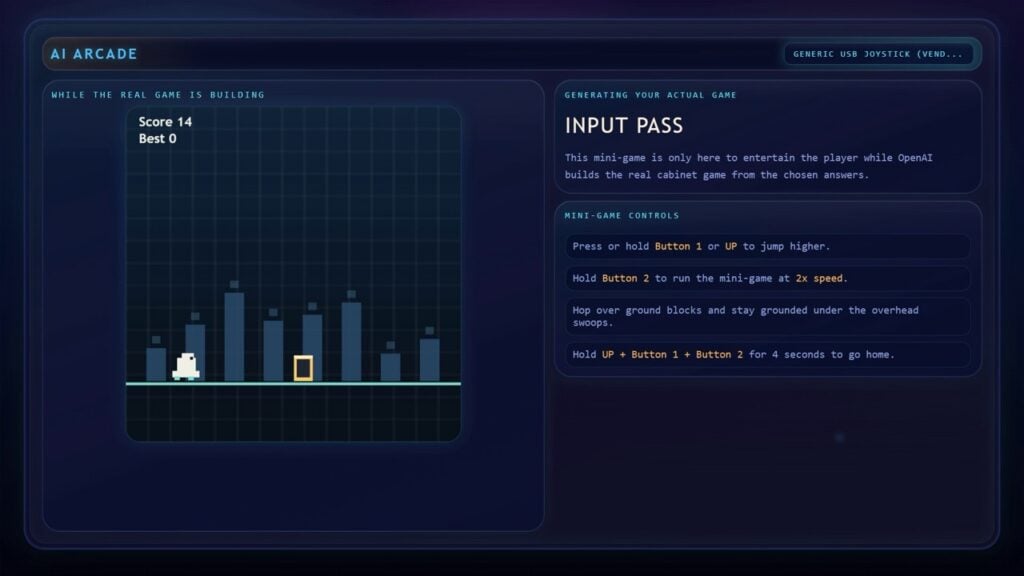
A significant portion of the development timeline was dedicated to the "appliance" feel. Todorov worked to ensure the Raspberry Pi would boot directly into a full-screen Chromium browser, hiding the Linux desktop environment entirely. He also added a "mini-game" feature—a small interactive element that entertains the player while the LLM works in the background to generate the main game code, which can take anywhere from 10 to 30 seconds.
Phase 4: Final Enclosure and Testing
The project was finalized by mounting the components into a wooden box. Todorov opted for a hole-saw drill bit and manual assembly over 3D printing, emphasizing a "raw" DIY aesthetic. The result was a functional prototype capable of generating, playing, and even saving games for future sessions.
Supporting Data: Technical Specifications and Performance
The AI Arcade relies on several layers of technology to bridge the gap between high-level AI and low-level hardware.
| Component | Specification / Detail |
|---|---|
| Processor | Broadcom BCM2711, Quad core Cortex-A72 (ARM v8) 64-bit SoC @ 1.8GHz |
| Memory | 8GB LPDDR4-3200 SDRAM |
| Storage | MicroSD card (OS and local game database) |
| Input | USB Arcade Joystick + 2 Microswitch Buttons |
| Software Stack | Raspberry Pi OS (Lite), Node.js/Python (Local Host), Chromium (Kiosk Mode) |
| AI Integration | OpenAI API (GPT-4o or GPT-3.5 Turbo) |
| Communication | Browser Gamepad API for joystick mapping |
The generation process is data-driven. The "Step 1" prompt consumes roughly 500-800 tokens to generate the questions. The "Step 2" prompt is much larger, often consuming 2,000 to 4,000 tokens as it requires the LLM to output a fully functional, bug-free HTML/JavaScript file. Because the games are based on standard web technologies (Canvas API or DOM manipulation), they run smoothly on the Raspberry Pi 4’s integrated VideoCore VI graphics.
Official Responses: Insights from Grigor Todorov
In interviews and documentation regarding the project, Todorov has been candid about both the triumphs and the limitations of current AI technology in game design.
"I wanted to experiment with LLMs in a more playful, physical way," Todorov explains. "As LLMs have improved so quickly, I became curious about what the future of gaming might look like with AI involved. One possibility was a device that could generate endless new games, giving you a fresh experience every time."
Regarding the "vibe-coding" process, Todorov noted that while it accelerates development, it requires a different kind of skill set. "I found it more interesting when the player could steer the result a little. The choices give the user some influence over the theme, mechanics, or style of the final game."
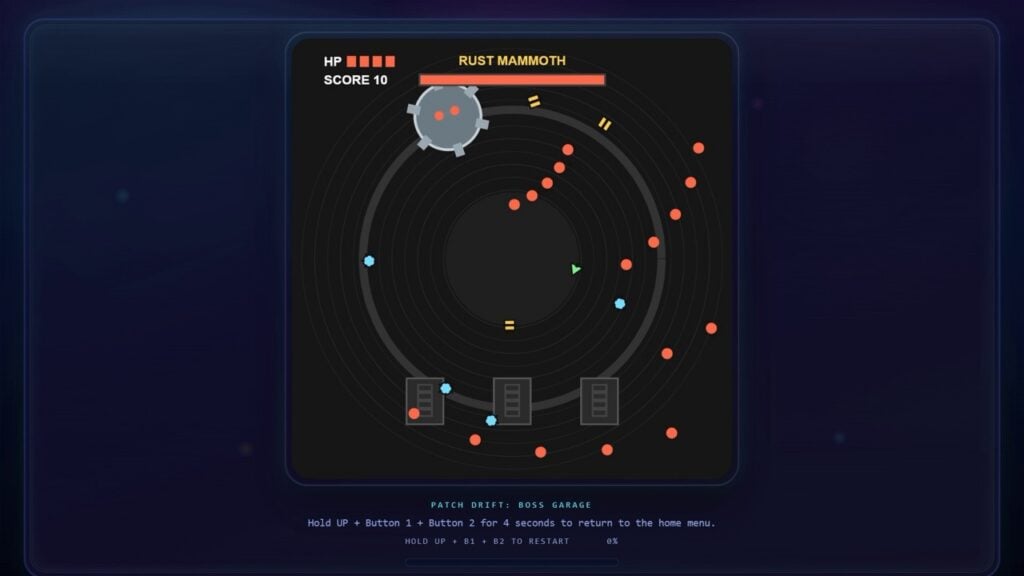
However, he admits that the technology isn’t perfect. "Sometimes the generated games work surprisingly well, and other times they are a bit broken. I tried to make the prompting more structured so that the output would be consistent and playable. The weakest part is usually the art. The assets are not especially strong, so I think the project could be improved by adding another AI model that specializes in generating higher-quality visuals."
His choice of the wooden box also reflects a specific philosophy: "I like reusing old packaging… For simple builds, I do not think 3D printing is always necessary. Sometimes an old box and a hole-saw drill bit are enough."
Implications: The Future of Generative Gaming
The AI Arcade is more than just a hobbyist’s weekend project; it is a proof-of-concept for a new category of entertainment. Several implications arise from Todorov’s work:
1. The Death of the "Static" Library
Traditionally, the value of a console was measured by its library of titles. In an AI-driven model, the value is measured by the "latent space" of the model—the infinite number of variations it can produce. This shifts the focus from consumption to co-creation, as the player’s choices directly influence the game’s existence.
2. Democratization of Game Development
By using "vibe-coding," Todorov demonstrates that the barrier to creating interactive hardware is lowering. You no longer need to be a C++ expert to build a gaming system. If you can describe the logic, the AI can assist in the implementation, allowing makers to focus on the physical form factor and the user experience.
3. The "Offline" AI Challenge
Todorov’s future plans include exploring offline generation. Currently, the AI Arcade requires an internet connection to reach the OpenAI servers. As "Small Language Models" (SLMs) become more capable, we may soon see Raspberry Pi-like devices running local AI that can generate games without any external connectivity, ensuring privacy and longevity for the hardware.
4. Aesthetic and Mechanical Evolution
Todorov’s interest in expanding to 3D games and adding more physical controls (extra buttons, multiplayer support) suggests that the "Arcade" is just the beginning. As AI begins to understand 3D engines like Three.js or even Unreal Engine, the "instant game" could evolve from simple 2D sprites to complex, immersive worlds.
Conclusion
Grigor Todorov’s AI Arcade serves as a fascinating intersection of the "Maker" spirit and the "AI Revolution." It takes the Raspberry Pi—a tool designed for education and experimentation—and uses it to probe the boundaries of what it means to "play" a game. While the games generated today might be simple and occasionally "broken," they represent the first steps toward a future where every gaming experience is unique, ephemeral, and limited only by the player’s imagination. As Todorov continues to refine the prompts and perhaps migrates to more specialized visual models, the AI Arcade stands as a wooden-clad monument to the infinite possibilities of the silicon age.